
Cast Iron Pipe Replacement in Miramar: What Happens When Old Pipes Fail Under Your Slab
A real job from a local kitchen: corroded cast iron, a cut slab, and new PVC that won't rot from the inside.
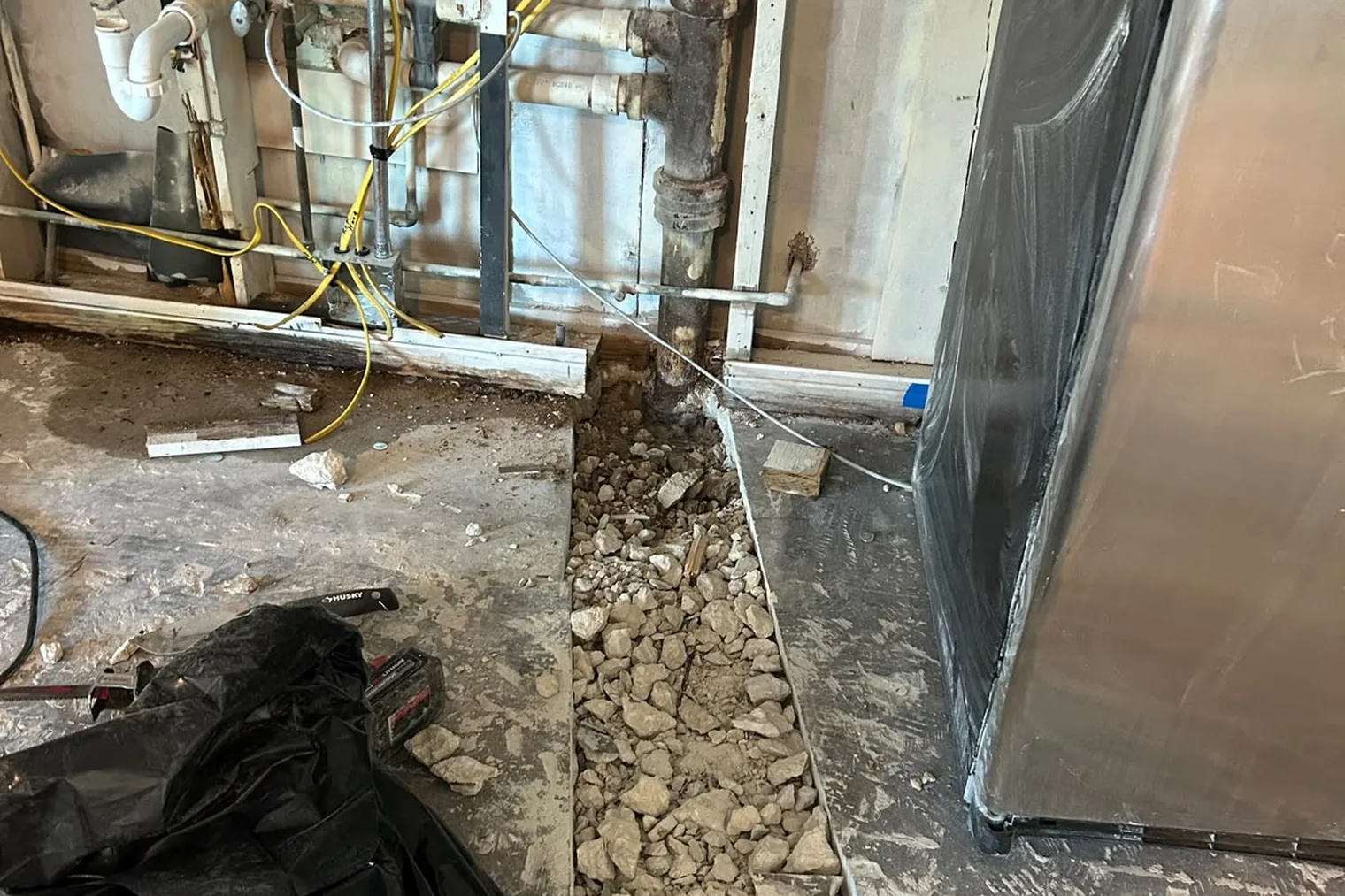
When the pipes under your floor are older than your kitchen
On a recent job near Miramar, we opened a kitchen wall and found the original cast iron drain stack, black and heavily corroded at the base. The pipe disappeared straight into the concrete slab, which meant the damage didn't stop at the wall.
This is common in South Florida. Many homes in Miramar, Pembroke Pines, and Southwest Broward were built when cast iron was the standard drain material. Decades later, those pipes are reaching the end of their working life, often without any obvious sign until something backs up or leaks.
Here's what failing cast iron looks like, why it happens here, and what replacing it actually involves.
Why cast iron fails in South Florida homes
Cast iron drain pipes usually fail from the inside out, so they can look fine from the outside while the bottom of the pipe is wearing away.
- Internal corrosion. Sewer gases and wastewater slowly eat into the iron. Rust builds up in rough layers that catch grease, hair, and debris.
- Channel rot. On horizontal runs under the slab, water flows along the bottom of the pipe for decades. That strip wears thin first and can open into a long crack.
- Florida conditions. High water tables, humidity, and sandy soil keep the area around under-slab pipes damp year-round.
- Age. Homes built several decades ago may still have their original drain lines, and many of those pipes are now past their expected service life.
Because most of this happens under concrete, homeowners often find out only after a backup, a bad smell, or a failed inspection.
Warning signs your cast iron pipes are failing
One sign alone can be a simple clog. Recurring or combined symptoms are worth inspecting to identify the cause.
- Drains that stay slow even after cleaning, or clogs that keep coming back
- Sewer odor inside the house, especially near floor drains or the kitchen
- Gurgling sounds from sinks or toilets when other fixtures drain
- Damp spots, new cracks, or lifting tiles and flooring
- Mold or mildew near the base of walls
- More roaches or other pests coming from drains
- A home inspector or insurance company asking about the age of your drain pipes
A video camera inspection helps assess the inside of accessible drain lines and guide repair or replacement recommendations.
What replacing cast iron under a slab looks like
On this job, the old line ran under the kitchen floor, so we replaced it by opening a narrow trench in the slab.
-
Inspect and plan the route
We confirm where the old line runs and where it ties into the rest of the system.
-
Cut and open the slab
We saw-cut a straight, narrow trench and break out only the concrete along the pipe's path. Defined cuts help keep the opening controlled and prepare the edges for patching.
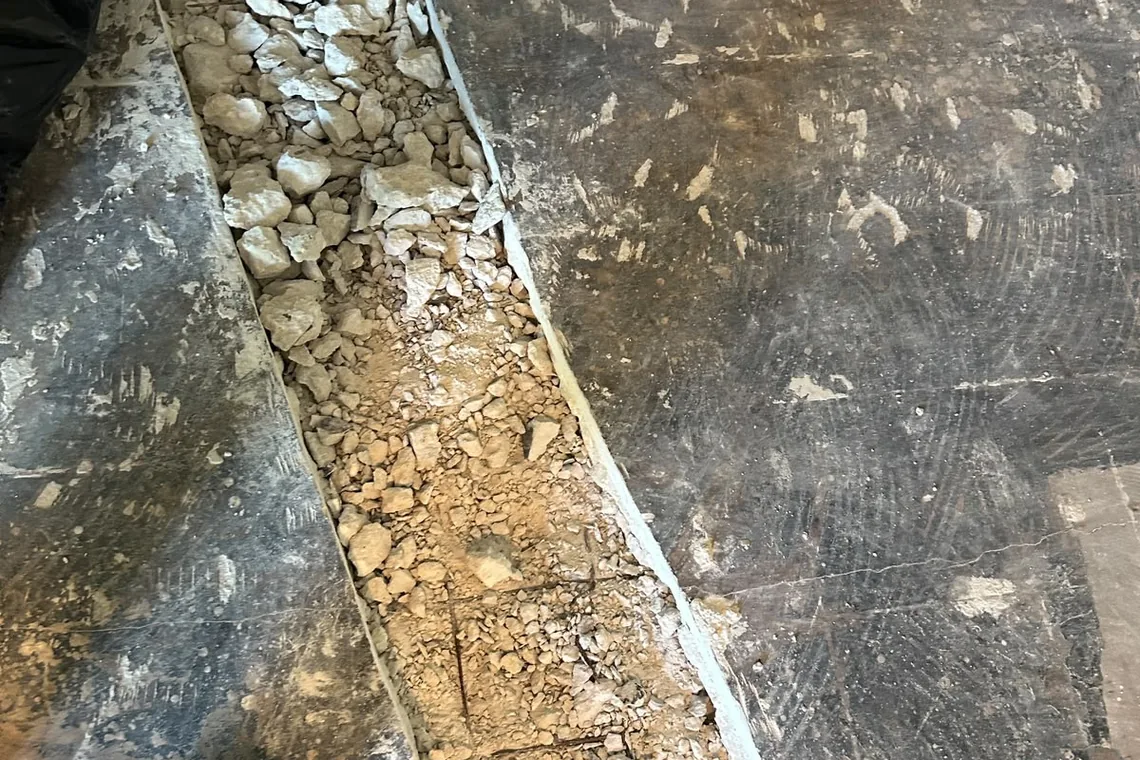
The slab opened along the drain line route. -
Remove the old pipe and install new PVC
The corroded cast iron comes out and new PVC drain pipe goes in with proper slope. In this kitchen, we also ran new water lines while the floor was open.
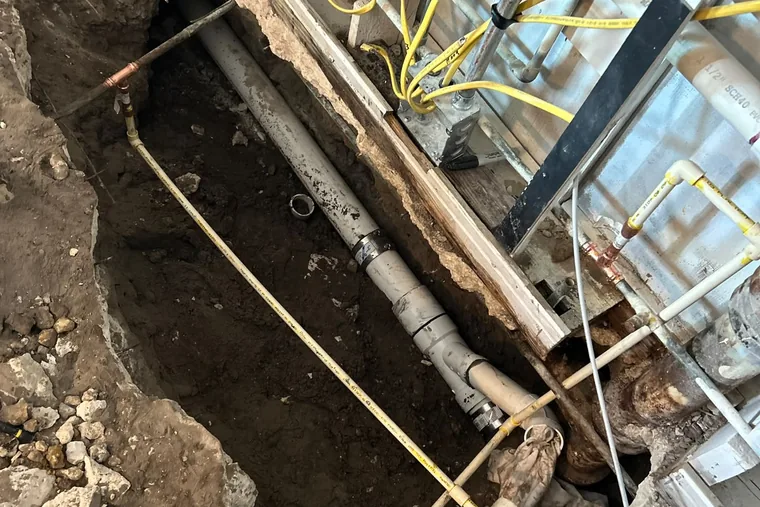
Replacement PVC drain line before the trench is closed. -
Connect to what stays and add a cleanout
A shielded transition coupling joins the new PVC to the existing pipe. We added a new cleanout so future drain problems can be reached without breaking concrete again.
-
Test, backfill, and patch
The new line is tested before we backfill, compact, and pour new concrete over the trench.
This kind of work typically requires a plumbing permit, which a licensed contractor handles.
Repair or replace?
The right fix depends on how much of the line is damaged, which a camera inspection shows.
| Option | When it makes sense | Trade-off |
|---|---|---|
| Spot repair | One cracked section, the rest of the pipe in good shape | Lower cost now, but other old sections may fail later |
| Section replacement | Damage along a run under one room, like this kitchen | Opens the floor in that area, but you get new pipe where it matters |
| Full replacement | Corrosion throughout the system | Bigger project, but it resets the clock on your drains |
| Pipe lining | Pipe still holds its shape and the layout allows it | Less demolition, but not every damaged pipe is a candidate |
If you're already remodeling, like in this kitchen, the floor and walls are open anyway. That's often the most cost-effective time to replace old cast iron.
Frequently asked questions
How do I know if my Miramar home has cast iron pipes?
Look for a heavy black or dark gray drain pipe where it enters a wall or near the water heater, laundry, or cleanouts. A plumber can confirm with a quick inspection.
How long do cast iron drain pipes last?
It varies with water use, soil, and installation. In South Florida, many original cast iron lines in older homes are already showing internal corrosion.
Do you have to break the floor to replace cast iron under a slab?
Usually yes, at least along the damaged section. A narrow, saw-cut trench keeps the opening as small as possible, and in some cases lining or tunneling can reduce demolition.
Can I replace just part of the pipe?
Yes, if a camera inspection shows the rest of the line is in good condition. New PVC connects to the existing pipe with a transition coupling.
Does replacing cast iron require a permit?
In most cases, yes. A licensed plumbing contractor pulls the permit and schedules the inspection.